From humble beginnings
Our first plantings were placed in the most challenging location possible (which in Ireland is a spot of serious botanical misery). Those blueberries that survived merited further study. Directly on the sea and with thin glacial till soil and clay, the plot gave us an opportunity to test 400 two-year-old organic plants in five cultivars (varieties) and scientifically measure what happened. We optimistically hoped that 40% to 60% would last through the heavy salt spray and tree-snapping storms from the North Atlantic winter weather. Planted in cultival-specific patches, the ground-cover was left as undisturbed as possible and each plant was labelled with a number for record keeping.
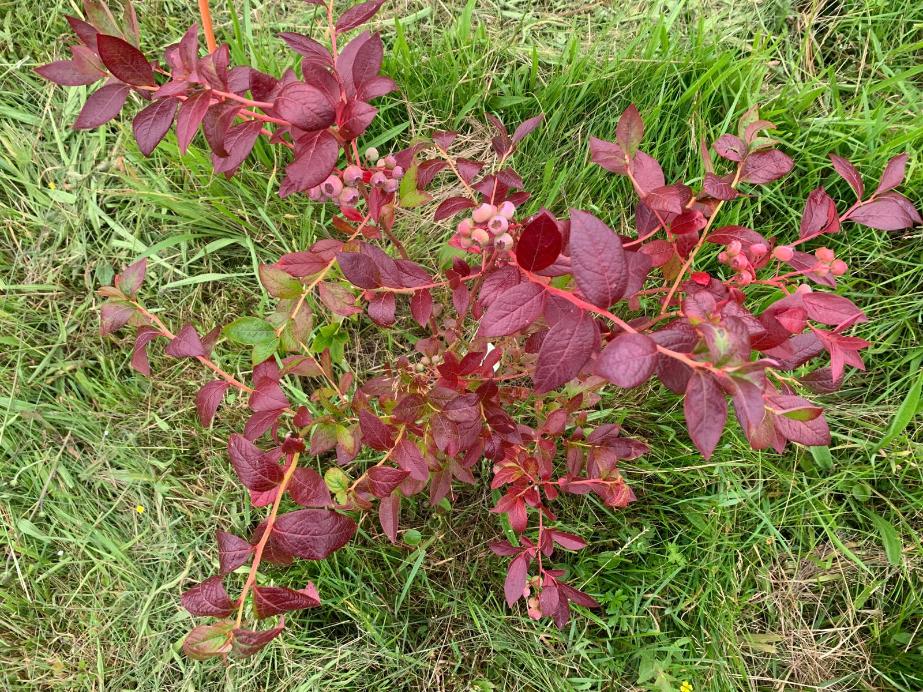
To our amazement, one-hundred percent of all the plants not only survived but also flourished. Berries were abundant and plant health was excellent in all cultivars. This after a year of punishing storms that uprooted mature trees and unexpected dry periods lasting more than ten days at a time.
Unlike the poly-tunnel and monoculture habits of industrial farming, we made a choice to partner with Nature in the most environmentally responsible and beneficial way we could. Our community and the Connemara region also receive untold tens of thousands of tourists who enjoy the dramatic landscape, shores with seals on rocks, and the gentle part of Irish living elsewhere lost in urban noise and commercialism. It seemed critical to responsibly share the delicate ecosystems as well as not scar the character of the land by keeping rows of plastic hoop houses out of the picture.
Digging silence
Say hello to our all-electric excavator! Only a metre wide, it is ideal for working in small areas, between rows, or creating ponds and waterways. Yes, it's made in China, but purchased through a local dealer. As for problems, there are none. It has worked without issues for months.
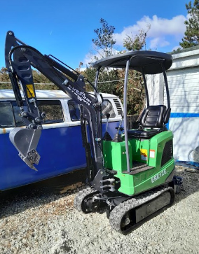
© Copyright Cashel Bay Horticultural Cooperative
What the permaculture system involves
An excellent summary of permaculture is already on Wikipedia. There are, of course, variantions in practices but the essential definition is the best-practices in weaving sustainable agriculture with positive environmental and ecological action. We apply this kind of thinking to everything we do, including the electric-only exclusion of petrol-driven tools and equipment on the plots.
Our choice has been to weave permaculture practices with the Miyawaki Method for growning trees. Our findings based on the local soil types, marine weather conditions, the diverse communities of microorganisms within the soil, and other factors told us it would be a serious mistake to remove the grasses, ferns, mushrooms, and other plants already inhabiting the plots. What we see around us in the isolated places without sheep (this is, after all, Ireland) is an impenetrable near-jungle of native and invasive plants all thriving on what is classified as nearly worthless soil. That soil is made workable thanks to other living things performing the chemistry needed for plant nutrition. Taking away the living networks in and above the ground would render an almost sterile form of arrested soil development. The botanical environment is working well now just as it is. By joining in with already symbiotic communities we are enhancing growth and nutrional conditions. We are also not trashing the landscape with the scars of monocultural farming and charmless polytunnels.